1939
The Marsten Marriage Horror
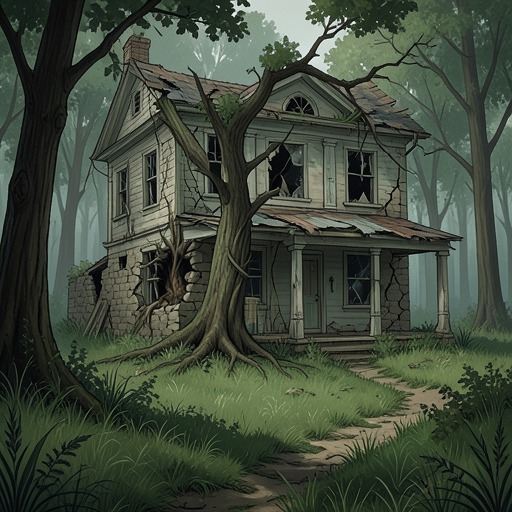
[Hubert Marsten](entity:character-recall-character-hubert-marsten-ea80dae2d179) is discovered after shooting [Birdie Marsten](entity:character-recall-character-birdie-marsten-dc6c280ba8db) and hanging himself in the [Marsten House](entity:location-recall-location-marsten-house-bd263d867a47). The house contains booby traps, occult traces, and the atmosphere of a sealed crime scene, establishing the property as the town’s enduring monument to evil.
Summer 1951
Ben’s Childhood Initiation
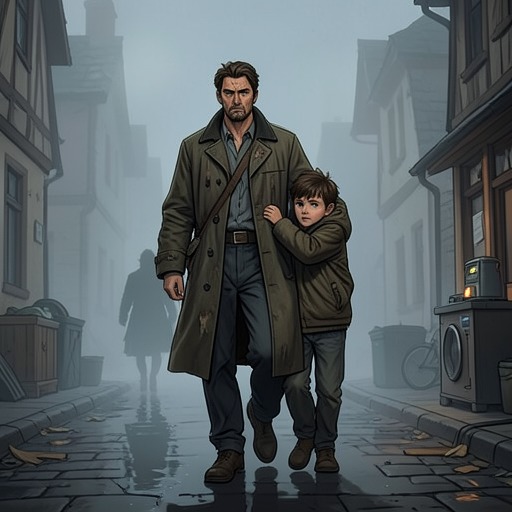
Nine-year-old [Ben Mears](entity:character-recall-character-ben-mears-3515d19a4811) enters the [Marsten House](entity:location-recall-location-marsten-house-bd263d867a47) to prove himself worthy of the [Bloody Pirates](entity:organization-recall-organization-bloody-pirates-2698fc7cbd31). He opens the bedroom where [Hubert Marsten](entity:character-recall-character-hubert-marsten-ea80dae2d179) died, sees the hanging figure open its eyes, and escapes with a glass snow globe. The encounter becomes the central trauma of his life and the source of his later return.
September 1951
The 1951 Fire
A devastating fire sweeps through much of [Jerusalem’s Lot](entity:location-recall-location-jerusalem-s-lot-8d32a74fa5c1), nearly reaching the [Marsten House](entity:location-recall-location-marsten-house-bd263d867a47) before the wind changes. The fire becomes the town’s defining public memory, while its true origin remains hidden, reinforcing the novel’s pattern of communal secrets and unacknowledged evil.
1928–1939
The Lost Children
During the years when the [Marsten House](entity:location-recall-location-marsten-house-bd263d867a47) is occupied, four children disappear from the surrounding area without their bodies ever being found. Ben later connects these cases with the house’s reoccupation, transforming old local rumor into evidence of a recurring supernatural pattern.
May 1973
Ben’s Motorcycle Loss
[Ben Mears](entity:character-recall-character-ben-mears-3515d19a4811) loses control of his motorcycle on a wet patch, and his wife [Miranda](entity:character-recall-character-miranda-e73e6a842c34) is killed beneath a moving van. The accident leaves him emotionally shattered, financially unstable, and haunted by another form of helplessness that will shape his response to the Lot’s supernatural crisis.
Summer 1974
The Straker Bargain
[Richard Throckett Straker](entity:character-recall-character-richard-throckett-s-cde97aeb7ffe) approaches [Lawrence Crockett](entity:character-recall-character-lawrence-crockett-43f8013def16) and offers him valuable [Portland](entity:location-recall-location-portland-1d591afddc1c) land in exchange for the [Marsten House](entity:location-recall-location-marsten-house-bd263d867a47) and the abandoned [Village Washtub](entity:location-recall-location-village-washtub-d7905463b180). Crockett must keep silent and arrange future services, binding the town’s greed to the arrival of a far older evil.
September 1975
The Crate Shipment
[Hank Peters and Royal Snow](entity:relation-recall-relation-hank-peters-and-roya-fbbb07aa3209) collect imported crates from [Custom House Wharf](entity:location-recall-location-custom-house-wharf-16ed93eb0741) and deliver them to the new shop and the [Marsten House](entity:location-recall-location-marsten-house-bd263d867a47). One heavy, anomalous box is taken into the cellar, while the movers glimpse clothing and feel the house’s oppressive presence, foreshadowing the vampire’s arrival.
September 5, 1975
Ben Returns
Ben returns to [Jerusalem’s Lot](entity:location-recall-location-jerusalem-s-lot-8d32a74fa5c1) intending to write a novel about the town and confront his childhood terror. Seeing the [Marsten House](entity:location-recall-location-marsten-house-bd263d867a47) still standing triggers both dread and recognition, but he decides to stay and rents a room at [Eva’s Rooms](entity:location-recall-location-eva-s-rooms-da8d2fd5f7d9) facing the house.
September 16, 1975
Ben Meets Susan
Ben meets [Susan Norton](entity:character-recall-character-susan-norton-0ec1593354da) in [the town park](entity:location-recall-location-the-town-park-2947fee4308a) when she recognizes him from his novels. Their conversation moves easily from books and artistic ambition to shared memories of the Lot, beginning a relationship that becomes the emotional center of his return.
September 16, 1975
The First Date
Ben and Susan go to a movie in [Portland](entity:location-recall-location-portland-1d591afddc1c) and later share drinks on the porch of [Eva’s Rooms](entity:location-recall-location-eva-s-rooms-da8d2fd5f7d9). They kiss, agree to meet again, and notice a strange light in the [Marsten House](entity:location-recall-location-marsten-house-bd263d867a47), linking their new intimacy to the danger gathering above the town.
September 24, 1975
The Shop Opens
Straker opens the [Barlow and Straker](entity:organization-recall-organization-barlow-and-strak-6b7ef2aee9ea) antique shop while his absent partner remains officially in New York. His charm, physical strength, and controlled contempt impress many townspeople, while a few sense something cruel beneath his courtesy.
September 17, 1975
Ralphie Disappears
Danny and [Ralphie Glick](entity:character-recall-character-ralphie-glick-cdb5d6b03718) take a shortcut through the woods toward [Mark Petrie](entity:character-recall-character-mark-petrie-1e4c5afd1366)’s house. Danny survives the encounter in a dazed state, but Ralphie vanishes. The disappearance marks the beginning of the town’s new cycle of supernatural predation.
September 17–21, 1975
The Search Fails
Residents and police search the woods, roads, streams, and river for Ralphie but find nothing. The failure exposes the town’s limited institutions and prepares the ground for explanations involving sexual crime, outsiders, or superstition rather than the truth.
September 17, 1975, near midnight
The Cemetery Offering
Straker stands in [Harmony Hill Cemetery](entity:location-recall-location-harmony-hill-cemeter-17c4ff2a5a29) and offers Ralphie’s body to the Lord of Flies. The ritual transforms a local child’s disappearance into the deliberate inauguration of Barlow’s conquest, making Straker the servant who prepares the town for vampiric occupation.
September 22, 1975
Danny Is Hospitalized
[Danny Glick](entity:character-recall-character-danny-glick-83dc6e1470c0) collapses after returning from the woods and is taken to [Central Maine General Hospital](entity:location-recall-location-central-maine-genera-2403512c5a0c). His tests reveal severe anemia without an obvious cause, while his parents and doctors interpret his lethargy and memory loss as illness and shock.
September 24, 1975, 1:00 a.m.
Danny Dies
Danny was found dead outside the hospital bed, obviously having tried to climb toward the window. The nurse noticed his unnatural appearance and the vanished bite marks, and the cause of death was officially recorded as malignant anemia. In fact, Danny had already entered the state of resurrection
September 28, 1975
The Glick Funeral Disturbance
At Danny’s graveside service, [Tony Glick](entity:character-recall-character-tony-glick-544612515a89) panics and falls onto the coffin, insisting that his son is not dead. His breakdown intensifies the family’s grief and leaves the townspeople with a spectacle that they remember as emotional collapse rather than supernatural warning.
September 28, 1975, after sunset
Mike Opens the Grave
[Mike Ryerson](entity:character-recall-character-mike-ryerson-1aba4acaf755) returns alone to finish burying Danny. Overcome by the sensation of being watched, he opens the coffin and sees Danny’s eyes open and alive-looking. The encounter becomes the point at which Mike is infected and begins his own transformation.
Late September 1975
Dud Meets Barlow
At [the Jerusalem’s Lot dump](entity:location-recall-location-the-jerusalem-s-lot-8a9410679835), [Dud Rogers](entity:character-recall-character-dud-rogers-4bcff0aa09bf) meets Barlow, who charms and hypnotizes him while promising access to [Ruthie Crockett](entity:character-recall-character-ruthie-crockett-29fd43ccfa9f). Barlow then kills him. The encounter demonstrates the vampire’s ability to exploit private resentment and desire rather than relying on physical force alone.
September 29, 1975
Mike Falls Ill
[Mike Ryerson](entity:character-recall-character-mike-ryerson-1aba4acaf755) appears at [Dell’s](entity:location-recall-location-dell-s-66c26b9118b4) pale, exhausted, and unable to eat or drink. He describes a dream of red eyes, drowning, and a visitor at his window, while admitting that he cannot remember finishing Danny’s grave. His symptoms reveal the progression of vampirism before the town recognizes it.
September 29–30, 1975
Matt Shelters Mike
[Matt Burke](entity:character-recall-character-matt-burke-b7030fc7a3da) brings Mike to his house and offers him a bed, hoping to get him medical help. During the night, Mike invites someone through the open window, confirming Matt’s fear that the traditional invitation rule may be real.
September 30, 1975, before dawn
Mike Returns
Mike’s apparently dead body lies in Matt’s guest room, but he rises after dark as a vampire. He tries to enthrall Matt and declares that he will return for him, turning a teacher’s rational home into the scene of an openly supernatural attack.
September 30, 1975, before dawn
Matt Repels Mike
Matt uses a crucifix to drive Mike backward through the window and revoke the invitation. The encounter proves that religious symbols can function as physical weapons when supported by conviction, but the strain leaves Matt suffering a heart attack.
September 30, 1975
The Investigation Begins
Ben, Matt, and Susan compare their evidence: Danny’s anemia, Mike’s disappearance and return, the open window, and the [Marsten House](entity:location-recall-location-marsten-house-bd263d867a47)’s history. They decide to treat vampirism as a working hypothesis and divide their tasks between research, medical inquiry, and investigation.
October 2, 1975
Ben Is Attacked
[Floyd Tibbits](entity:character-recall-character-floyd-tibbits-52bb40878629) ambushes Ben outside [Eva’s Rooms](entity:location-recall-location-eva-s-rooms-da8d2fd5f7d9), believing Ben has stolen Susan from him. Wearing gloves and an overcoat, Floyd attacks with irrational fury and leaves Ben hospitalized. His behavior is later revealed as the result of vampiric enthrallment.
October 2, 1975
Susan Leaves Home
Susan confronts [Ann Norton](entity:character-recall-character-ann-norton-ca07c78dd296) over Ben, Floyd, and her mother’s attempts to control her future. After slapping her mother, she announces that she will move into town, marking her rejection of domestic surveillance and her commitment to Ben.
October 4, 1975
Floyd Dies
Floyd is found dead in the town lockup, officially from acute anemia. His body later disappears from the county morgue, confirming that the vampire outbreak is spreading through people who have been attacked and that conventional death records can no longer be trusted.
October 4, 1975
Randy Is Taken
[Danny Glick](entity:character-recall-character-danny-glick-83dc6e1470c0) enters the McDougall trailer and kills the abused baby Randy. Sandy discovers the child dead and breaks down, while the event shows that the vampires prey on domestic vulnerability and that the contagion has moved beyond the original Glick family.
October 4, 1975, evening
Barlow Converts Corey
After [Reggie Sawyer](entity:character-recall-character-reggie-sawyer-02b71dc15148) humiliates [Corey Bryant](entity:character-recall-character-corey-bryant-013b3e8edc86) for sleeping with Bonnie, Corey meets Barlow on the [Deep Cut Road](entity:location-recall-location-deep-cut-road-3f2bf22ac903). Barlow turns Corey’s rage and shame into a promise of revenge, then converts him into another servant of the growing [vampire colony](entity:organization-recall-organization-bb71e1d7c24f).
October 5, 1975, at sunset
Marjorie Rises
Ben and [Jimmy Cody](entity:character-recall-character-jimmy-cody-c132bc00395a) keep watch over [Marjorie Glick](entity:character-recall-character-marjorie-glick-13e66083f28a)’s corpse at [Green’s Mortuary](entity:location-recall-location-green-s-mortuary-5a88b71aa49d). At sunset she sits up, calls for Danny, and attacks them. Her resurrection proves that the dead are returning actively and that the Glick family tragedy is the central engine of the outbreak.
October 6, 1975, night
The Petrie Family Dies
Mark escapes from the [Petrie house](entity:location-recall-location-petrie-house-684d0c733753) and reaches the hospital, where he reveals that Barlow killed his parents. Their deaths remove the last domestic refuge in Mark’s life and leave him emotionally hardened for the final struggle.
October 6, 1975, afternoon
Matt Dies
Matt suffers a fatal heart attack in the hospital while researching [Momson](entity:location-recall-location-momson-eadf0a57fa85) and the history of mass disappearance. His death removes the group’s strategist and scholar, forcing Ben and Mark to proceed against Barlow without his guidance.
October 6, 1975, afternoon
The Blue Chalk Clue
Mark remembers blue chalk on Barlow’s fingers, and [Jimmy](entity:character-recall-character-jimmy-7097cd16d51d) connects it with billiard rooms and Eva’s old pool table. They infer that Barlow is hiding in the basement of [Eva Miller’s boardinghouse](entity:location-recall-location-eva-miller-s-boardin-d00ca823b186).
October 6, 1975, late afternoon
Jimmy Dies in the Trap
[Jimmy](entity:character-recall-character-jimmy-7097cd16d51d) and Mark enter Eva’s boardinghouse basement and discover that Barlow has removed part of the stairs and placed knives beneath the gap. Jimmy falls onto the concealed blades and dies, while Mark escapes with the knowledge of Barlow’s trap.
October 6, 1975, early evening
Ben Finds the Root Cellar
Mark reaches Ben and explains [Jimmy](entity:character-recall-character-jimmy-7097cd16d51d)’s death and the hidden pool table. Ben returns to the boardinghouse, retrieves Jimmy’s body, and uses the light of sunset to locate a concealed root-cellar door behind a Welsh dresser.
October 6, 1975, 6:51 p.m.
Barlow’s Coffin Opens
Ben and Mark enter the root cellar and find Barlow’s coffin among the bodies of Eva and the boardinghouse residents. When they open it, Barlow’s gaze enthralls Mark and nearly overcomes Ben, but Ben knocks Mark away and prepares to strike before sunset.
October 6, 1975, 6:55 p.m.
Barlow Dies
Ben drives a stake through Barlow’s heart and hammers it deep into his chest. Barlow’s body rapidly decays into bones, dust, and empty clothing, but his destruction does not free the vampires already created in the town.
October 6, 1975, after sunset
The Town Falls
The newly risen vampires emerge from the cellar and spread through [Jerusalem’s Lot](entity:location-recall-location-jerusalem-s-lot-8d32a74fa5c1). Ben carries Mark away, but the town’s surviving population is already being converted, and Barlow’s death becomes a victory without immediate liberation.
October 7, 1975
Ben Buries the Dead
Ben returns to the Lot, retrieves [Jimmy](entity:character-recall-character-jimmy-7097cd16d51d)’s body, and buries him with Henry and [June Petrie](entity:character-recall-character-june-petrie-73a72d725f7e) beside [Taggart Stream](entity:location-recall-location-taggart-stream-dc6355669f53). The act gives the dead a measure of dignity, while Ben accepts that the town itself is now beyond ordinary rescue.
October 7, 1975
Ben Burns His Manuscript
At [Eva’s Rooms](entity:location-recall-location-eva-s-rooms-da8d2fd5f7d9), [Ben burns the manuscript](entity:action-recall-action-94c653ee438a) he wrote in [Jerusalem’s Lot](entity:location-recall-location-jerusalem-s-lot-8d32a74fa5c1). The glass snow globe that helped hold the pages becomes a final image of the house’s spell, and he smashes it before leaving, rejecting the novel that had been built from his trauma.
October 7, 1975
Ben and Mark Escape
Ben and Mark drive out of the Lot before the vampires can stop them. They reach a motel across the New Hampshire line, where Mark remains vigilant and Ben begins to understand that survival has not ended the danger.
October 1975–1976
The Burned Town Persists
Reports continue to describe disappearances, animal killings, missing families, and frightening encounters around [Jerusalem’s Lot](entity:location-recall-location-jerusalem-s-lot-8d32a74fa5c1) and nearby towns. The evidence suggests that Barlow’s infection has survived his destruction and that the Lot’s evil has become a regional contagion.
October 6, 1976
The Return to Burn the Lot
A year later, Ben and Mark return to [Jerusalem’s Lot](entity:location-recall-location-jerusalem-s-lot-8d32a74fa5c1) with holy water and the intention of driving out the vampires. They see the abandoned businesses, the closed houses, and the still-haunted [Marsten House](entity:location-recall-location-marsten-house-bd263d867a47), then decide that fire is the only force capable of exposing the hidden undead.
October 6, 1976, afternoon and evening
The Lot Burns
Ben deliberately starts a fire in dry brush near the town, and the autumn wind carries it through [Jerusalem’s Lot](entity:location-recall-location-jerusalem-s-lot-8d32a74fa5c1). The fire promises purification but cannot guarantee that every vampire will be destroyed; Ben and Mark leave knowing the hunt will continue.
January 10, 1972
The Lumley Rescue
During a blizzard, [Gerard Lumley](entity:character-recall-character-gerard-lumley-7de1e74256fd) reaches [Tookey’s Bar](entity:location-recall-location-tookey-s-bar-69a5f697e80a) after losing his wife and daughter near [Jerusalem’s Lot](entity:location-recall-location-jerusalem-s-lot-8d32a74fa5c1). [Herb Tooklander](entity:character-recall-character-herb-tooklander-90356bc860c4) and [Booth](entity:character-recall-character-booth-55ad1dccf44c) drive into the storm to search for them, discovering that Janey and Francie have become vampires and that the rescue itself is a trap.
January 10, 1972, late night
The Lumley Attack
Janey attacks Gerard in the snow, while Francie nearly lures [Booth](entity:character-recall-character-booth-55ad1dccf44c) into picking her up. Tooklander’s Bible repels the child long enough for Booth to escape, but the incident confirms that the Lot’s vampires continue to prey on travelers beyond the town itself.
October 1850
Chapelwaite’s Dark History
[Charles Boone](entity:character-recall-character-charles-boone-372bd0d7aaa1) moves into [Chapelwaite](entity:location-recall-location-chapelwaite-c96ea8d9545e) and hears local warnings about the Boone family, the deserted [Jerusalem’s Lot](entity:location-recall-location-jerusalem-s-lot-8d32a74fa5c1), and supernatural corruption in the house. He and [Calvin McCann](entity:character-recall-character-calvin-mccann-ac8ccdee1a78) investigate the estate and find evidence linking the Boone bloodline to the forbidden book [De Vermis Mysteriis](entity:expression-recall-expression-de-vermis-mysterii-cadc34a9f5a4).
October 20, 1850
The Cellar Apparitions
[Charles and Calvin explore Chapelwaite’s cellar](entity:action-recall-action-chapelwaite-49ceb7438a63) and encounter undead figures behind a hidden partition, including a corpse bearing the rope burn of suicide and the reanimated body of Marcella Boone. The experience convinces Charles that the Boone family is bound to [Jerusalem’s Lot](entity:location-recall-location-jerusalem-s-lot-8d32a74fa5c1) and to a force beneath the church.
October 24, 1850
Robert’s Coded Diary
Calvin deciphers [Robert Boone](entity:character-recall-character-robert-boone-055c0484d37d)’s diary, which describes [Philip Boone](entity:character-recall-character-philip-boone-a0790b580dc9)’s initiation into [James Boon](entity:character-recall-character-james-boon-8e1e47fdc81b)’s cult and his pursuit of [De Vermis Mysteriis](entity:expression-recall-expression-de-vermis-mysterii-cadc34a9f5a4). The diary reveals that the 1789 disappearance of [Jerusalem’s Lot](entity:location-recall-location-jerusalem-s-lot-8d32a74fa5c1) followed an attempt to summon or serve the Worm.
October 27, 1850
The Worm Awakens
Charles and Calvin return to [Jerusalem’s Lot](entity:location-recall-location-jerusalem-s-lot-8d32a74fa5c1) and find the church transformed into a sacrificial chamber. Charles burns [De Vermis Mysteriis](entity:expression-recall-expression-de-vermis-mysterii-cadc34a9f5a4) as a monstrous segment of the Worm rises beneath the pulpit, but Calvin is thrown aside and the supernatural force survives beyond the destruction of the book.
November 4, 1850
Charles’s Final Flight
Charles, convinced that he is the last gateway of the Boone bloodline, writes his final letter and prepares to go to the sea. His account is later dismissed as madness and forgery, but the surviving evidence leaves open the possibility that the Worm and the town’s curse remain active.